Cities We've Been

Saturday, December 5, 2009

Panama - Bocas del Toro

Nov 12, 2009 Boquete to Bocas del Toro

Today, we take bus, taxi, and boat to the northern Caribbean coast of Panama. Climbing over the pass in a Toyota Coaster, we see both the Pacific and Atlantic oceans, as Panama is only 40 to 110 miles wide.

In Bocas, we stay at the Calipso Hostel, in the middle of town. It’s a great deal; $25 per night with AC in an attractive wood building with kitchen access. The owner from Barcelona is very friendly, and keeps her place clean. The four markets in town are run by Chinese immigrants; very convenient as our Mandarin is better than our Spanish.


Nov 13-17, 2009 Bocas del Toro

We spend three days diving with La Buga Dive, including our first night dive. The visibility is not very good because of all the rain runoff. But, our divemaster, Jose, is a super cool local who stops by our hotel to say hello and have a drink. Thanks to Jose for not losing us in the dark!

Monday, Nov 16, is Bocas foundation day. We are treated to four hours of parades, and several days of thumping music and drunkenness directly in front of our hotel.

One day, we take a pretty lousy tour of the local islands, although a break in the rain makes the boat ride very enjoyable.

We stay an additional day because it’s pouring rain till 2PM the day we plan to leave.

For tropical places, Bocas is not particularly special, but it is cheap and relaxing. We enjoy our stay, but are sorry to notify the owner of the Hotel Calipso when we catch a hotel employee in our room, who stole $20. She is crushed.


red fog

the wreck

colorful sea star on the coral

small crab

big crab


lobster on our morning dive

lobster for our lunch!

moray eel on our first night dive, it was peaceful

Kevin roasts the coffee beans from Boquete

chopped with a knife, and brewed in a cup

CLICK HERE to see more diving pictures.

CLICK HERE to see Bocas pictures.

Thursday, November 19, 2009

Panama - Boquete

Nov 9, Panama City to Boquete, Panama

Our bus travels “north” 6 hours on the Pan-American highway to David, where we change to a yellow sixties era school bus, for a one hour trip up the foothills to Boquete. Boquete offers an interesting mix of pleasant sub-tropical weather, friendly locals, coffee plantations, adventure activities, and retired gringos in gated communities; apparently AARP listed as a new hot spot.

We are happy to find everything located within a few blocks. We stay at the Boquete Hostel, a really pleasant and relaxing spot overlooking the river. There’s nothing quite like a good night sleep to the sounds of the flowing water, then waking up with a glass of freshly squeezed OJ, and a locally grown coffee.

are we in Panama or Philippines? Same Same, but different

Panama city -> David -> Boquete


Nov 10, Boquete, Panama

Today we take a fascinating coffee tour with Café Ruiz; fascinating for us because coffee is one of the biggest commodities in the world that we know almost nothing about. The tour visits the three places of coffee production;

1) plantation,
2) processing plant
3) roasting facility

On the plantation, we pick some ripe fruit (yes, coffee is a fruit) and are fired immediately. We try several times but just can’t get the right twist and pull motion to pick the fruit without damaging the stems. We are surprised to find the fruit tastes quite delicious. Perhaps if the seed wasn’t so big and smelled so nice during a forest fire some time back in Ethiopian history, then we might be drinking coffee juice with breakfast. At the processing plant, we learn about what it takes to ready coffee for export;

• Picking (October – March)
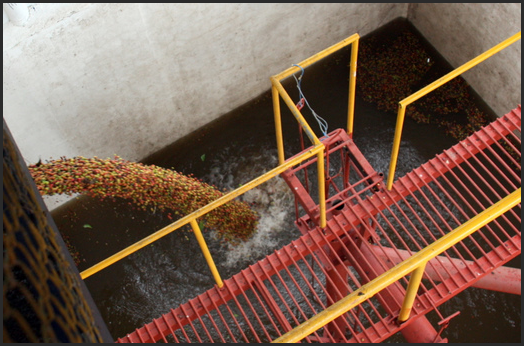
• Floating: to detect seeds with air from bugs
• Squeezing: to separate the fruit from seeds

• Fermentation: to remove the sticky sugars on the seeds (only 24 hrs)

• Washing: to remove the skins and fruit from the seeds

• Pre-drying (3 hrs)

• Drying (36 hrs)

• Aging (4-6 months)

• Peeling: to remove the two layers of skin

• Sorting by density, color, shape, size; required for accurate roasting


Although Café Ruiz exports 90%, we visit their small roasting facility to learn about the final step; roasting light, medium, and dark roasts for 16-24 minutes (aka; European, Latin, Italian, and French roasts). In our guide’s opinion, European roast is the best, as the dark roasts burns the beans, and ruins the flavor.

Unfortunately, the tasting part of the tour was disappointing. We tried light, medium, and dark roasts to detect their subtle differences. But, the coffee brew was weak, and didn’t smell fresh. In the end, it seems quality water and fresh preparation is more important than anything else.

touring Café Ruiz's coffee plantation with Carlos

picking the coffee fruit

but we are fired right away

maybe we can make a coffee juice out of the tasty fruit

it's easy to grow a coffee tree, but you need the right climate

Vana joins the picking crew

floating

squeezing, fermentation, washing

pre-drying and drying

aging

peeling

sorting by density, color, shape, size (they have a machine for that, thank goodness!)

roasting. according to Italians, this is the most important step

smell test: chocolate (correct), vinegar (over-fermented), fishy (over-roasted)

taste test with a big nose


Nov 11, 2009 Boquete, Panama

Today, we take a Jeep tour to visit the nearby cloud forest, and see the local sights. Surprisingly, the most interesting part of the tour is a visit to a small independent coffee farm run by a cheerful fellow named Tito. Our tour runs several hours over schedule as we bombard Tito with questions about his farm. Why grow eight varieties of coffee if this one is the most productive? If they all taste different, why blend the varieties?

We ask him about organic farming. He says a lot of farmers are interested, but it is impossible now, because organic coffee doesn’t get a higher price in Panama.

Tito is proud to show us his homemade machines. Next to his roaster, he shows us a spoon wielded to a flathead screwdriver that he uses; “muy importante!”. We roast a small batch of beans, and snack on a few, before drinking some fresh brew.

volcano rock formations for climbing

cloud forest

Tito's farm

Tito teaches to differentiate the varieties. Guessha (considered to be the best) grows somewhat erratically.

Caturra (or the rest) has a very high yield

Drying the beans while separating into 3 classes: best quality, good, and so-so. Take a guess which is which!

Loading his homemade peel, squeeze, and pre-sorting machine

pulling out European roast from Tito's small homemade test roaster

fresh roasted beans (we made them!)

that's the story behind a cup of coffee

back at the hostel, Kevin pre-drying his seven hand picked beans. Results? Coming Next!

CLICK HERE to see more Boquete pictures.